A Meaningful Tribute for Every Situation
However you choose to remember them, a memorial wall brings loved ones together to share and preserve what mattered most.
Memorializing a loved one is not about finding the “right” way to grieve. There is no single right way. It is about choosing a tribute that helps you honor your loved one’s memory, keep their spirit alive, and create space for family and friends to feel connected.
This guide is for anyone looking for meaningful ways to remember a deceased loved one: family members planning a memorial service, close friends hoping to pay tribute, or anyone trying to create a lasting tribute after a difficult loss.
Before planning activities, pause and ask what the memorial should do. Do you want something private or shared? Temporary or permanent? Quiet or celebratory? Practical or symbolic? The best memorial ideas are not always the biggest. They are the ones that reflect the person’s life and the relationship you had with them.
Why Remembering Intentionally Helps
Grief can make time feel strange. Some people want to act immediately. Others need weeks, months, or even years before creating a memorial feels possible. Both are normal.
A memorial service does not require the body to be present, and memorial services can be held weeks or months after a death. That flexibility can help families plan with more care and less pressure.
Intentional remembrance can support the grieving process by giving people a way to express love, share stories, and return to favorite memories. A quiet moment, a memory table, a memorial garden, or a digital memorial can all become a place where grief has somewhere to go.
Selection Considerations for Choosing a Tribute
Before choosing a tribute, think about the person you are honoring and the people who will be involved. A fitting tribute should reflect the loved one’s life, values, relationships, and personality.
It helps to weigh a few priorities: budget, permanence, privacy, location, time, and emotional energy. Some memorial ideas are completely free. Others require planning, materials, or professional support.
Budget matters, but it does not determine meaning. A handwritten note, a favorite meal, or a memory jar can be deeply moving. A memorial tree, memory quilt, or cremation keepsake can also carry special meaning.
Involve close family members early when possible. Memorializing a loved one can stir strong feelings, and collaborative decisions often prevent misunderstandings later.
Practical Ideas to Honor Your Loved One
The following ideas range from simple rituals to permanent memorials. You do not need to do all of them. Choose one or two that fit your loved one’s spirit, your own life, and the needs of the people grieving with you.
1. Create a Memory Jar for Sharing Memories
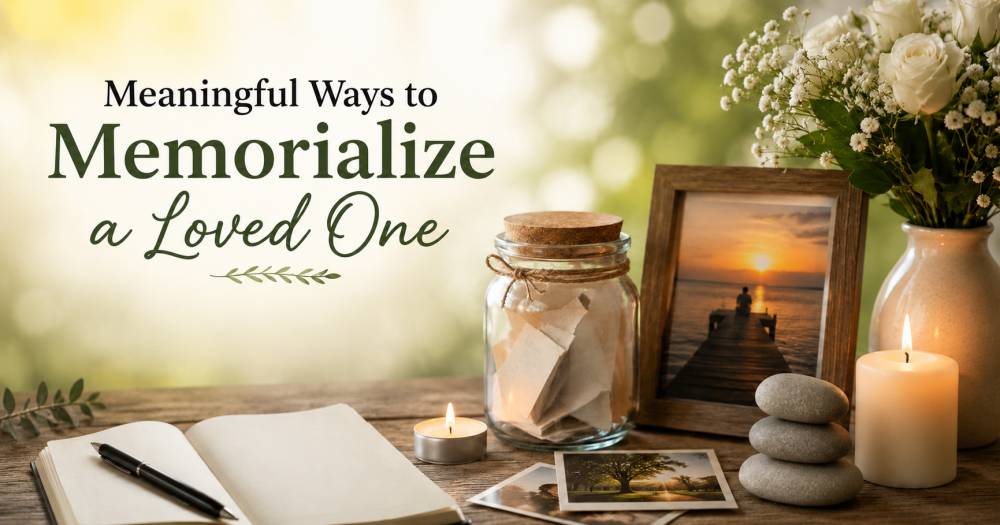
A memory jar is one of the simplest ways to gather family, friends, and favorite memories in one place. Set out small cards, pens, and a decorative jar at a memorial service, family gathering, or quiet table in the home.
Invite family members and close friends to add notes whenever they are ready. The cards can include a story, a phrase, a lesson, a thank-you, or one small thing they never want to forget.
This works because it does not ask anyone to give a speech. A person who cannot speak publicly may still be able to write one sentence.
A Meaningful Tribute for Every Situation
However you choose to remember them, a memorial wall brings loved ones together to share and preserve what mattered most.
How to Present Memories at Gatherings
At reunions, anniversaries, birthdays, or holidays, you can read selected notes aloud. Keep the tone gentle. Ask permission before reading anything that feels private.
The memory jar can also remain accessible for future quiet moments. Someone may add a note months later when a memory returns unexpectedly.
Over time, the jar becomes a living memory book. It gives grief a small ritual and helps keep the memory alive without forcing a formal event.
2. Host a Candlelight Vigil or Quiet Moment
A candlelight vigil creates a peaceful atmosphere for remembrance. It can happen in a backyard, local park, childhood home, faith community, funeral home, or any meaningful location that holds significance.
Lighting candles can symbolize each year of a person’s life, the love they gave, or the way their presence continues in the lives of others. You can invite a mix of friends and family members, or keep the gathering very small.
A vigil does not need to be elaborate. Sometimes one quiet moment is enough.
Rituals to Structure a Candlelight Moment
You might begin by lighting one central candle in honor of your loved one. Then invite others to light smaller candles from that flame.
Designate a moment for silent reflection. After that, one person can offer a brief remembrance, prayer, poem, or favorite story.
If the loved one had favorite songs, you can play one at the beginning or end. The structure should support the moment, not overwhelm it.
3. Plant a Memorial Tree or Garden
Planting a tree in memory is a living tribute. It symbolizes life, growth, and connection. A memorial tree can become a visible marker that family members visit over time.
Choose a tree species that fits the local climate and the available space. If planting at home is not possible, ask about options at a local park, community garden, cemetery, school, church, or nature preserve.
A memorial garden can also include favorite flowers, wind chimes, stones, benches, or a small plaque. The goal is to create a place where remembrance feels grounded.
Ways to Involve Family Members in Planting
Schedule a planting date for close relatives and friends. Keep the ceremony simple: a few words, shared soil, a favorite song, or a quiet reflection.
Family members can take turns adding soil or water. Children can place stones or small markers around the tree.
A Meaningful Tribute for Every Situation
However you choose to remember them, a memorial wall brings loved ones together to share and preserve what mattered most.
Assign seasonal care tasks to family volunteers. Someone may water it in summer, clear leaves in fall, or bring flowers on special occasions. These small acts help sustain connection.
4. Assemble a Photo Album or Photo Album Scrapbook
A photo album helps tell the loved one’s life story visually. Collect photos across life stages: childhood, school years, work, friendships, marriage, parenthood, travels, family gatherings, and quiet everyday moments.
Ask guests to write captions for pictures. A simple line like “This was the summer he taught us to fish” can give a photo more life.
A photo album scrapbook can include ticket stubs, handwritten recipes, cards, funeral flowers pressed into paper, or copied pages from old letters.
Presentation Options for the Photo Album
At a memorial service, display a table of favorite photos. A memory table can include personal items that tell the loved one’s story: glasses, tools, books, awards, recipes, sports memorabilia, or a favorite hat.
A digital photo wall can also display photos in a memorial setting. This is useful when you have many images and want guests to see different chapters of a person’s life.
You can gift copies to distant family members so they feel connected, especially if they could not attend the service.
5. Transform Clothing Into a Memory Quilt
A memory quilt can be made from a loved one’s clothing. Shirts, dresses, uniforms, scarves, ties, aprons, or pajamas can all carry emotional meaning.
Collect garments and textiles that reflect different parts of the person’s life. A father’s flannel, a mother’s scarf, a best friend’s concert shirt, or a child’s favorite hoodie can become part of the design.
You can hire a quilter or organize a sewing session if family members have the skills and emotional readiness.
Care and Display Tips for a Memory Quilt
Store the quilt in a breathable fabric cover when not in use. Avoid plastic storage for long periods because fabric needs airflow.
Rotate the quilt display to preserve the fabric. If it will be used daily, accept that it may wear over time. That use can be part of its meaning.
For some families, a memory quilt is a daily physical connection. For others, it becomes a special occasion item brought out on birthdays, anniversaries, or holidays.
6. Commission Cremation Keepsakes and Cremation Services Options
If your loved one was cremated, there are many cremation services options for creating keepsakes. Some families choose traditional urns, while others prefer smaller keepsakes that can be worn or displayed.
Cremation keepsakes may include jewelry, small urns, glass art, or items made with a portion of the loved one’s ashes. Cremation diamonds can be made from ashes or hair. Memorial jewelry can also be made from sentimental heirlooms, such as a ring, charm, or watch.
These choices can feel intimate, so give family members time to discuss them.
Legal and Practical Points to Confirm
Research reputable cremation services providers before sending ashes, hair, or heirlooms. Verify provider credentials, reviews, timelines, and security procedures.
Ask about customization, shipping options, insurance, and whether the process can be reversed or changed once started.
If several family members want keepsakes, decide how ashes or materials will be divided. A calm conversation early can prevent hurt feelings later.
7. Host a Celebrate-Life Gathering With Favorite Songs
A celebrate-life gathering can feel different from traditional funerals. It may be casual, warm, story-focused, and built around the person’s personality.
You might gather at a favorite restaurant, family home, local park, beach, community hall, or backyard. Serve a favorite food, pour a favorite wine if appropriate, or cook a loved one’s favorite meal.
A Meaningful Tribute for Every Situation
However you choose to remember them, a memorial wall brings loved ones together to share and preserve what mattered most.
Cooking a favorite meal can evoke comforting memories. Preserving recipes in a cherished format can also connect family and friends to a loved one.
Ways to Include Favorite Stories and Music
Build a playlist of favorite songs. Music can be used during arrivals, transitions, meals, quiet reflection, or the closing moment.
Invite guests to share short favorite stories. Give a loose time limit so no one feels the event has to become formal.
Live music can be beautiful if it fits the loved one’s spirit. A song, instrument, or simple group singalong may feel more personal than a traditional program.
8. Build a Digital Memorial for Sharing Memories
A digital memorial helps friends and family share memories from anywhere. It can include photos, videos, written tributes, service details, and personal stories.
Set up a private memorial website or page where invited contributors can share photos, upload videos, and add notes. This is especially helpful when people live far away or cannot attend in person.
Collecting video messages from friends and family can create a lasting tribute, especially when you use a dedicated video message platform like AnyMilestone. Hearing someone’s voice tell a story can feel more personal than reading text alone.
Tips to Curate and Preserve Digital Memories
Back up digital content to multiple storage locations. Save copies of photos, videos, written tributes, and comments so the memorial does not depend on one platform.
Enable comment moderation for privacy. This gives the family control over what appears publicly and helps protect sensitive content.
A virtual memorial can also become an ongoing archive. People can visit after the service, on an anniversary, or during a difficult time when they want to feel connected.
9. Start a Memory Journal with Blank Pages
A memory journal gives people a quiet place to write over time. Start with blank pages and label a few sections: “favorite stories,” “things they taught us,” “moments we miss,” “family recipes,” or “letters to them.”
Guests can write entries during a memorial service, at family gatherings, or privately. A signed memory book allows guests to leave personal messages, but a journal can continue beyond the day of the funeral.
Writing letters to the deceased can be a therapeutic way to express feelings. It gives grief language when speaking aloud feels too hard.
How Blank Pages Become Ongoing Legacy
Schedule annual writing prompts for family members. On a birthday, anniversary, or holiday, ask people to add one new memory or letter.
You can later bind collected entries into a keepsake volume or turn shared stories into a thoughtful video wall gift using AnyMilestone. This can be especially meaningful for children, grandchildren, nieces, nephews, or anyone too young to remember the person fully.
Blank pages are not empty. They are an invitation to keep remembering.
A Meaningful Tribute for Every Situation
However you choose to remember them, a memorial wall brings loved ones together to share and preserve what mattered most.
10. Donate, Volunteer, or Fund a Cause They Cared About
Some memorials honor a loved one by continuing what mattered to them. This could mean donating to an animal shelter, supporting national parks, funding cancer research, helping a local school, or giving to a faith community.
Select charities tied to their passions. If they loved animals, choose an animal shelter. If they loved nature, consider conservation or national parks. If they cared about education, a scholarship may be appropriate.
Establishing a scholarship or donation fund can honor someone’s memory in a lasting way.
Long-Term Legacy Options
You might organize a memorial volunteer day. Family and friends can gather once a year to serve meals, clean a local park, support a shelter, or contribute to a cause.
Set up recurring donations in their name if the budget allows. Even a small monthly contribution can become a lasting tribute.
For a larger effort, establish a small scholarship or grant. This can connect the loved one’s legacy to future lives.
Quick Scan of Memorial Options
Choose a simple ritual if you need immediate comfort. A candle, quiet moment, handwritten note, favorite meal, or memory jar can help when planning something larger feels overwhelming.
Pick a keepsake if you want daily physical connection. Memorial jewelry, a loved one’s urn, a memory quilt, or a small heirloom can offer closeness.
Opt for a living tribute if permanence matters. A memorial tree, memory garden, scholarship, or annual volunteer day can keep growing over time.
Use digital memorials to include distant loved ones. A memorial website, photo wall, video tribute, or online memory book can bring together people who are spread across the world.
How To Choose The Right Tribute
The right tribute is the one that fits the person, the family, and the moment. Try not to feel pressure to make it grand.
Start with the relationship. A spouse, child, sibling, parent, or best friend may need something more personal than a distant acquaintance. At the same time, community tributes can be meaningful when the person affected many lives.
Think about what will bring comfort rather than what will impress others. Memorializing a loved one is not a performance.
Choose Based On Relationship Closeness
Match the intensity of the tribute to emotional needs. A memory jar may be enough for one family. Another family may need a memorial service, garden, quilt, and digital archive.
Include family members for collaborative projects. Quilts, cookbooks, gardens, and memory books often work better when multiple people contribute.
If relationships are complicated, choose a structure that gives people options. Not everyone needs to participate in the same way.
Choose Based On Budget And Practicality
Prioritize low-cost options if funds are limited. A beautiful tribute can be created with printed photos, handwritten notes, favorite recipes, candles, and shared stories.
Outsource complex crafts when time is short. A memory quilt, photo album, memorial jewelry, or professional video tribute may be easier with help.
A Meaningful Tribute for Every Situation
However you choose to remember them, a memorial wall brings loved ones together to share and preserve what mattered most.
Remember that funeral arrangements may already create financial strain. Choose memorial ideas that support healing rather than adding pressure.
Choose Based On Desired Permanence
Select living tributes for ongoing growth. Trees, gardens, scholarships, and annual gatherings can become part of family life.
Choose keepsakes for wearable, daily reminders. Jewelry, small urns, clothing items, or heirlooms can feel grounding.
Choose digital memorials when you want to preserve a wide range of voices, photos, and videos. This can be especially valuable for families spread across distance.
Which Tribute Might Suit You
Pick a memory jar for intimate family sharing. It is simple, low-cost, and easy to continue over time.
Pick a memorial tree for a visible living marker. It works well when the loved one cared about nature, growth, home, or place.
Pick cremation keepsakes for wearable closeness. These may suit someone who wants a private, daily connection.
Pick a digital memorial if you want to gather family, friends, photos, videos, and written messages in one place. This is especially useful when many people have stories to share.
Final Notes On Sustaining Connection
Memorials do not end grief, and they are not supposed to. Their purpose is to help love continue in a form you can return to.
Plan small annual rituals to feel connected. Gather on a loved one’s birthday, cook their favorite meal, visit the memorial garden, light a candle, or share a story.
Document favorite stories before they fade. Ask parents, grandparents, siblings, cousins, and close friends to write or record what they remember.
Revisit blank pages and update memories periodically. A memorial can grow as your grief journey changes.
Meaningful memorialization blends the deceased loved one’s passions with continued connection. However you choose to honor your loved one, let the tribute reflect both their life and the love that remains.